
How Often Should Actors Update Their Headshots?
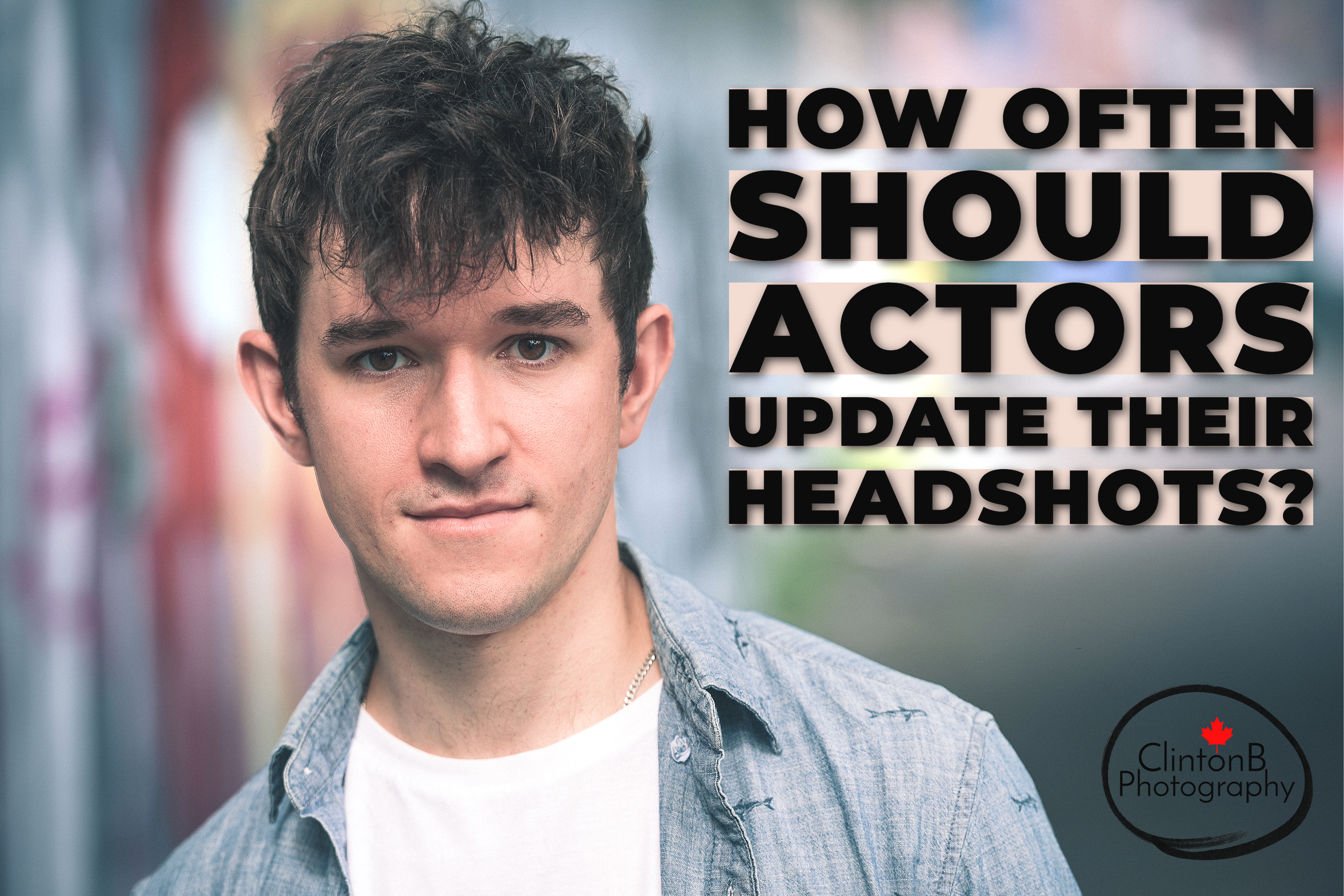
A practical guide to knowing when it’s time for new shots
Actors ask me this all the time, and I get it. I’m still a working actor too, and when auditions feel slow, I’ve asked myself the same thing: do I need an update, or are my current shots still doing the job?
That’s usually when this question shows up. You’re submitting. You’re waiting. Things feel quiet. And you start wondering whether your materials might be part of the problem.
Here’s the standard I use:
You should update your headshots when they stop looking like you, when they stop reflecting how you’re cast, or when they stop feeling current enough to be useful.
That’s it.
Not every year on the dot, but when the photos stop pulling their weight, that’s when it’s time.
Because headshots are part of the package. They help a casting director decide whether to click, whether to remember you, and whether they can place you quickly in the role they’re trying to solve. When the photo is off, it creates friction right away.
Do these still look like me?
And I mean me now.
Maybe your hair changed. Maybe you grew a beard, shaved one off, stopped coloring the gray, lost weight, gained weight, or just look a little more lived-in than you did a couple of years ago. Sometimes nothing dramatic happened, but the old photo still no longer matches the person walking into the room.
I know this from my own materials. I normally wear a beard. If I shave for a role, I try to update my shots because clean-shaven me reads differently in submissions. The photos should match what they’re actually calling in.
Your headshot should feel like a clear preview of the person who shows up. If it doesn’t, a casting director has to work harder than they should.
Do these reflect how I’m cast now?
This is the part a lot of actors miss.
Sometimes the photo still looks like you, but it’s selling an older version of your casting. You may have more authority now. More edge. More calm. More specificity. Maybe you used to read college senior and now you read ADA. Maybe the old shot says eager best friend and now you read teacher, detective, therapist, parent, nurse, startup founder, public defender, campaign manager, or the person quietly running the whole room.
Actors often outgrow photos in casting before they outgrow them physically.
That’s usually a good thing. It means you’ve gotten sharper. More grounded. More castable. Your materials need to catch up.
Do these still feel up to date?
Not trendy. Up to date.
A headshot does not need to chase whatever style is floating around this year. But it should still feel clear, believable, and easy to place in the market you’re submitting to now.
Usually actors can feel when something has gone stale. You hesitate before submitting. You keep using the same shot because the rest feel dated. You show someone your gallery and immediately start explaining that the photos are older.
Pay attention to that feeling.
These are not vanity questions. They’re professional ones.
Do these still look like me?
Do they reflect how I’m cast now?
Do they still belong on my online submission profiles?
That’s the test.
As a general rule, most actors should take a serious look at their headshots every one to two years. That does not mean everyone needs a full new session every year. It means reassessing honestly.
Some actors can go longer. Some really shouldn’t.
Kids and teens usually need updates more often because they change fast. Adults may change less dramatically, but our casting shifts in other ways. Energy changes. Authority changes. Life experience starts to show in the face. The photos need to keep pace.
And to be fair, slow auditions do not automatically mean your headshots are the problem.
Sometimes the market is weird. Sometimes your reps are focused elsewhere. Sometimes it’s timing. Sometimes it’s just the usual actor spiral after a quiet stretch.
So I would not use “things feel slow” as the only reason to update. But I would use it as a good moment to assess.
And when it is time, the goal is not just newer photos.
It’s more accurate photos. More aligned photos. Photos that better reflect the actor a casting director is actually bringing in now.
That’s what we work through in my preshoot strategy sessions.
Before the shoot, we take a close look at your current materials and get honest about what they’re communicating. We talk through the roles you’re most likely to book now, which shots still help, which ones may be muddy or outdated, and where your package may need more clarity or range.
Then we build from there.
We go through wardrobe strategically, not by guessing on shoot day, but by choosing a small number of looks that support your casting, feel true to you, and read clearly on camera. We look for the places where a different texture, color, neckline, layer, or level of polish can shift the story in a useful way.
There’s usually a good amount of texting and emailing involved, and often a phone call or two, because I want you showing up with a plan instead of a pile of maybes.
By the time the session starts, we already know what we’re aiming at.
Then the job becomes capturing it well.
But the standard stays simple:
Your headshots should look like you, reflect how you’re cast, and make it easy for a casting director to recognize where you belong.