
Specificity First: How Headshots Actually Open Doors
One of the most common tensions actors feel around headshots sounds like this:
“I don’t want to get boxed in.”
“I want to show my range.”
“I’m versatile. I can do a lot of things.”
All of that can be true. And still miss the point of what headshots are actually for.
This post isn’t about limiting yourself. It’s about understanding how casting works, and how versatility and specificity play very different roles at different moments in your career.
Versatility Is Real. Headshots Aren’t Where You Prove It.
Versatility lives in your work.
It shows up in auditions. In callbacks. In rehearsal rooms. In the choices you make once you’re given material.
Headshots don’t need to prove how much you can do. They need to make it easy for casting to know where to start with you.
That’s a critical distinction.
Casting directors aren’t asking headshots to answer every possible question. They’re looking for a clear, believable entry point. A place to put you quickly and confidently when sorting through submissions.
When a headshot tries to demonstrate versatility instead of specificity, it often becomes vague. And vagueness is hard to cast.
Specificity Is About Speed, Not Limitation
Specificity gets a bad reputation.
Actors hear “type” and think it means being reduced, stereotyped, or locked into one thing forever. But in practice, specificity is about efficiency.
We want casting to say:
I recognize this person.
I know where they might fit.
I don’t have to work hard to place them in my world.
That ease matters.
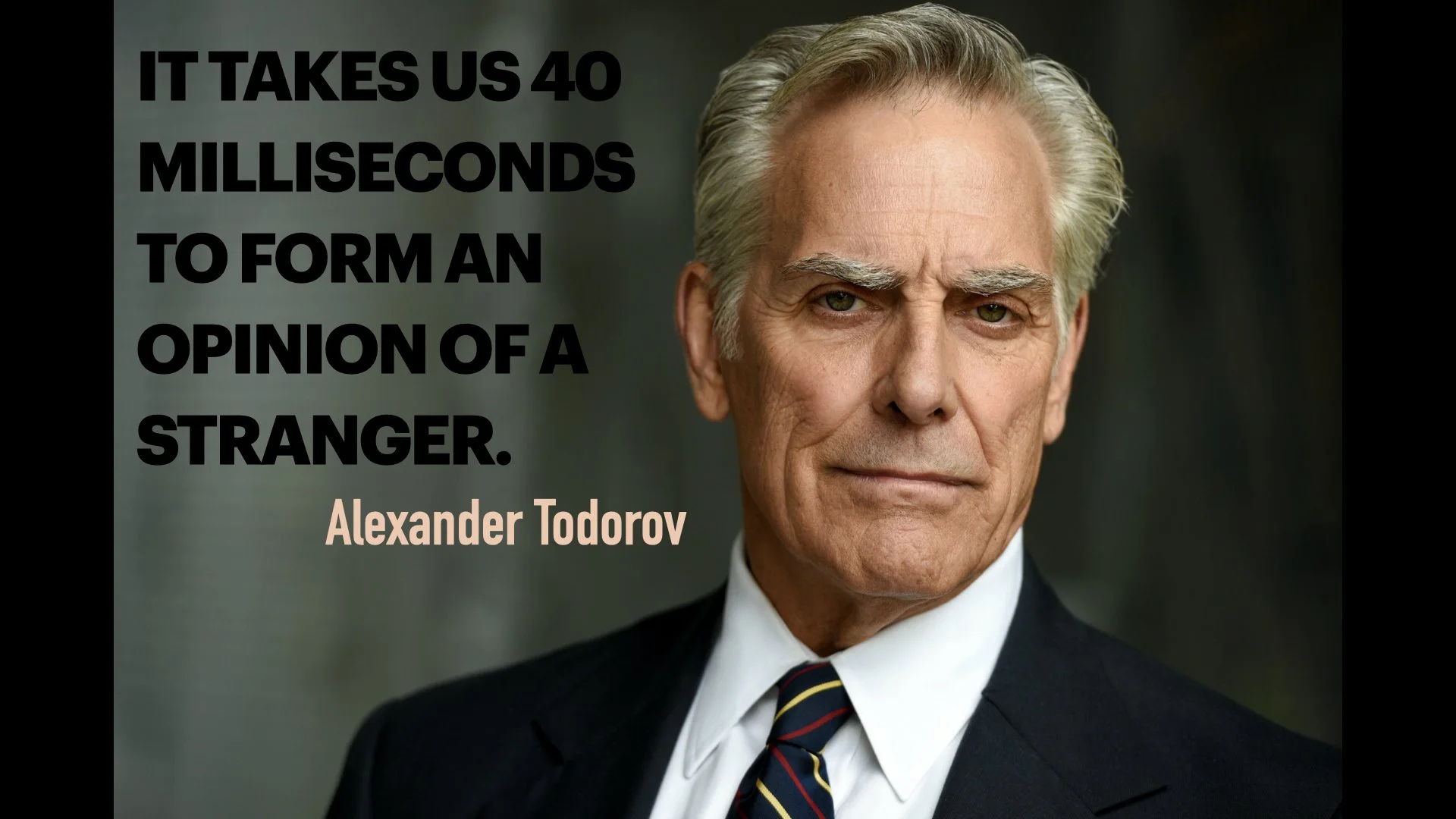
Casting is moving fast. They’re scanning thumbnails. Making snap judgments. Deciding who gets a closer look.
Specificity doesn’t shrink your career. It opens the door.
Four vague headshots don’t beat one clear one.
And in my opinion, four really clear headshots rule the day.
You can always add more down the road. I find that four covers a lot of bases for actors without being overwhelming.
If you’re submitting for yourself, that’s great. You have control. You can decide which shot to lead with, and you can even hide the others if they’re working against the role you’re going for. Reduce the friction. Clear the mud.
If you have an agent or manager submitting on your behalf, remember this: you’re not their only client.
If you’ve got fifteen headshots on your profile and you’re expecting them to stop and deliberate over which one to submit, well… let’s just say that doesn’t always happen. It takes time. Make it easy for them.
Otherwise, the default often becomes “submit primary headshot,” even when the role is more therapist than survivor on The Walking Dead.
Headshots Are a Starting Point, Not a Summary
This is worth repeating.
A headshot is not meant to summarize your career, your talent, or your emotional range. It’s meant to introduce you. Or perhaps a new version of you.
Think of it as the first sentence, not the entire paragraph.
The job of a headshot is to get casting to say, “Yes, I see where this person fits,” and then click to see more.
What happens after that depends on you.
How Specificity Leads to Opportunity Over Time
Here’s the part actors often miss.
When you get known for doing what you do well and easily, casting begins to recognize you beyond just the image. Name recognition builds. Trust builds. People remember your work.
That’s when versatility expands, because casting now has proof, not speculation.
Once casting trusts you, they’re far more willing to imagine you in roles adjacent to your type, or even outside it. But that permission comes after clarity, not before. Make sense?
Specificity is frequently what gets you seen.
Versatility is what gets you trusted.
What This Means for Your Headshot Session
Before you shoot, it’s worth asking:
What rooms am I trying to get into right now?
What do I want casting to understand instantly?
Where has there been confusion or hesitation?
What problem do these headshots need to solve?
Those answers should shape your shoot more than abstract ideas about range.
During a session, specificity shows up in small choices:
Wardrobe that suggests a clear world
Expressions that feel grounded and readable
Backgrounds that support context without distraction
When those choices align, your headshots do their job quickly and honestly.
The Takeaway
Versatility is something you earn through work and consistency.
Specificity is how you get in the door.
Strong headshots don’t limit your future. They clarify your present. And clarity is what casting responds to first.
If you’re building new headshots, aim for images that know what they’re for. The rest of your range can reveal itself once the door is open.
One Last Thing
I feel like I’ve gotta say this.
I don’t believe actors need to force themselves into a genre or a world in order to get called in. You don’t. And you shouldn’t.
Every actor should have at least one headshot that is simply them.
Not “them as a role.”
Not “them aiming at a market.”
Just them, clearly and honestly.
Funny enough, this shows up all the time in sessions.
Clients arrive in their street clothes, we chat, we settle in, and if what they’re wearing works for camera, I’ll often grab a few frames before we even touch wardrobe. And almost always, those frames yield some real winners.
Why?
Because there’s no effort yet. No performance. No strategy layered on top. Just presence.
Chances are, the way you naturally present already aligns with one or two casting worlds that come up again and again in film and television. It all depends on your personal style.
That might be post-apocalyptic or sci-fi.
It might be family drama.
It might be commercial work.
It might be blue-collar roles, or a not-so-stuffy guy in a suit.
Sometimes an actor lives clearly in one of these worlds. Sometimes they overlap two. Occasionally someone sits at an interesting intersection.
Take that shot.
If you don’t take it, you definitely can’t use it. Might as well try and see what you get.
The point isn’t to force yourself into a category. The point is to understand where casting can place you most easily right now. I’m just giving you a way to think about it strategically when you’re doing your headshot prep homework.
Once that starting place is clear, everything else gets simpler. Submissions make more sense. Headshot choices get more focused. And casting doesn’t have to work as hard to imagine you in the room.
The goal isn’t to disappear into a category.
The goal is to be seen clearly enough that casting wants to meet you or see your work.
That’s the balance.
— Clint