Hack Your Headshots, Headshot Philosophy Clinton Brandhagen Hack Your Headshots, Headshot Philosophy Clinton Brandhagen

What Makes a Headshot Successful (Before Anyone Clicks)

Casting decisions start with a grid of thumbnails and seconds of attention. A successful headshot isn’t always the most beautiful image. It’s the one that makes someone pause and want to know more. This piece breaks down what actually makes a headshot work before anyone clicks, and why clarity, presence, and restraint matter more than polish.
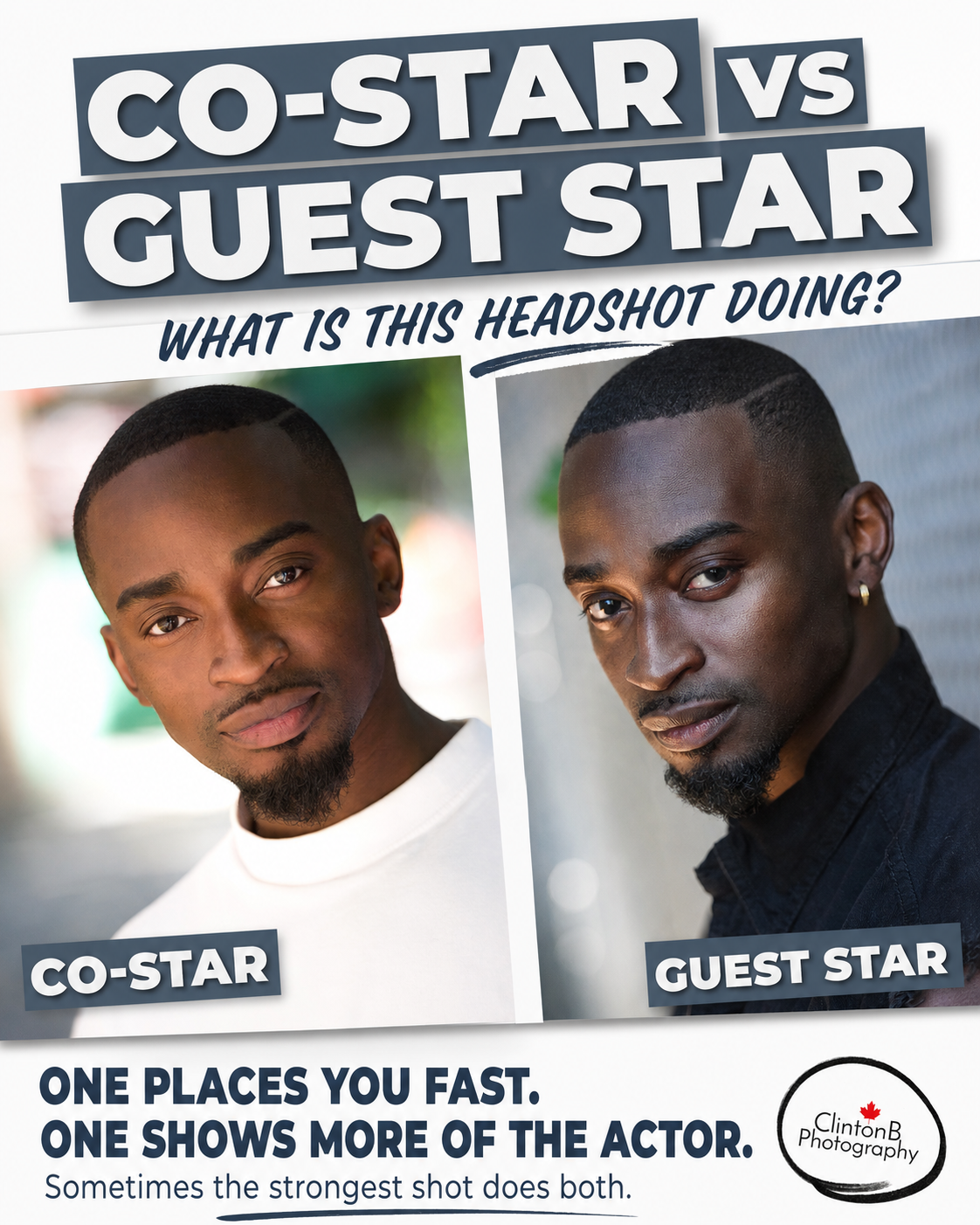
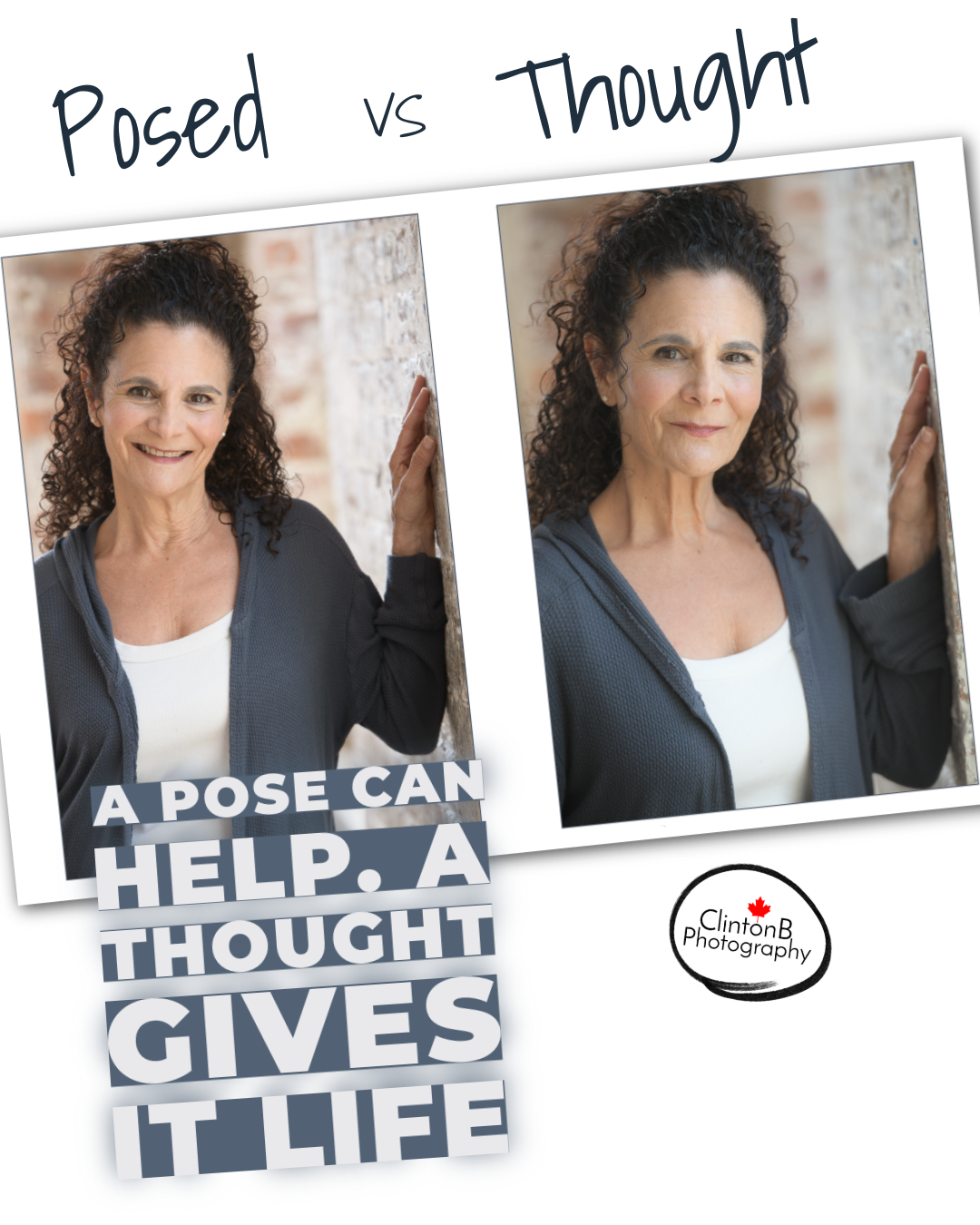
Casting starts with a huge grid of thumbnails and about two seconds of attention. Forty milliseconds, actually.

A successful headshot is rarely the one you love the most. It is not always the most beautiful image in your set. It is the one that makes someone pause and want to know more.

That distinction matters.

When I think about what makes a headshot successful, I am not thinking about polish or production value in isolation. I am thinking about whether the image creates curiosity. Whether it pulls a viewer in and holds them long enough to earn a click.

Before we get practical, let’s zoom out and talk about art.

The photographs that stay with us are usually not the ones that impress us technically. They connect on a psychological level. Every time we look at an image, we interpret something. We look for meaning, even when we are moving quickly. We are wired to search for what is underneath.

Great photographs ask something of the viewer. They ask them to stay for a moment. To look again. To engage.

Headshots can do this too. And I think they should.

If a headshot offers nothing to interpret, there is nothing to hold onto. The eye slides right past it.

This is where lighting often gets misunderstood.

Good light in headshots is not about mood for its own sake. It has a very specific job. It helps the viewer find the face immediately. It creates shape, clarity, and contrast so the image reads at a very small size. If the light does not do that, the headshot never gets a fair chance.

But light alone is never enough.

You can have technically perfect lighting and still end up with an image that feels empty. That is where narrative enters the picture.

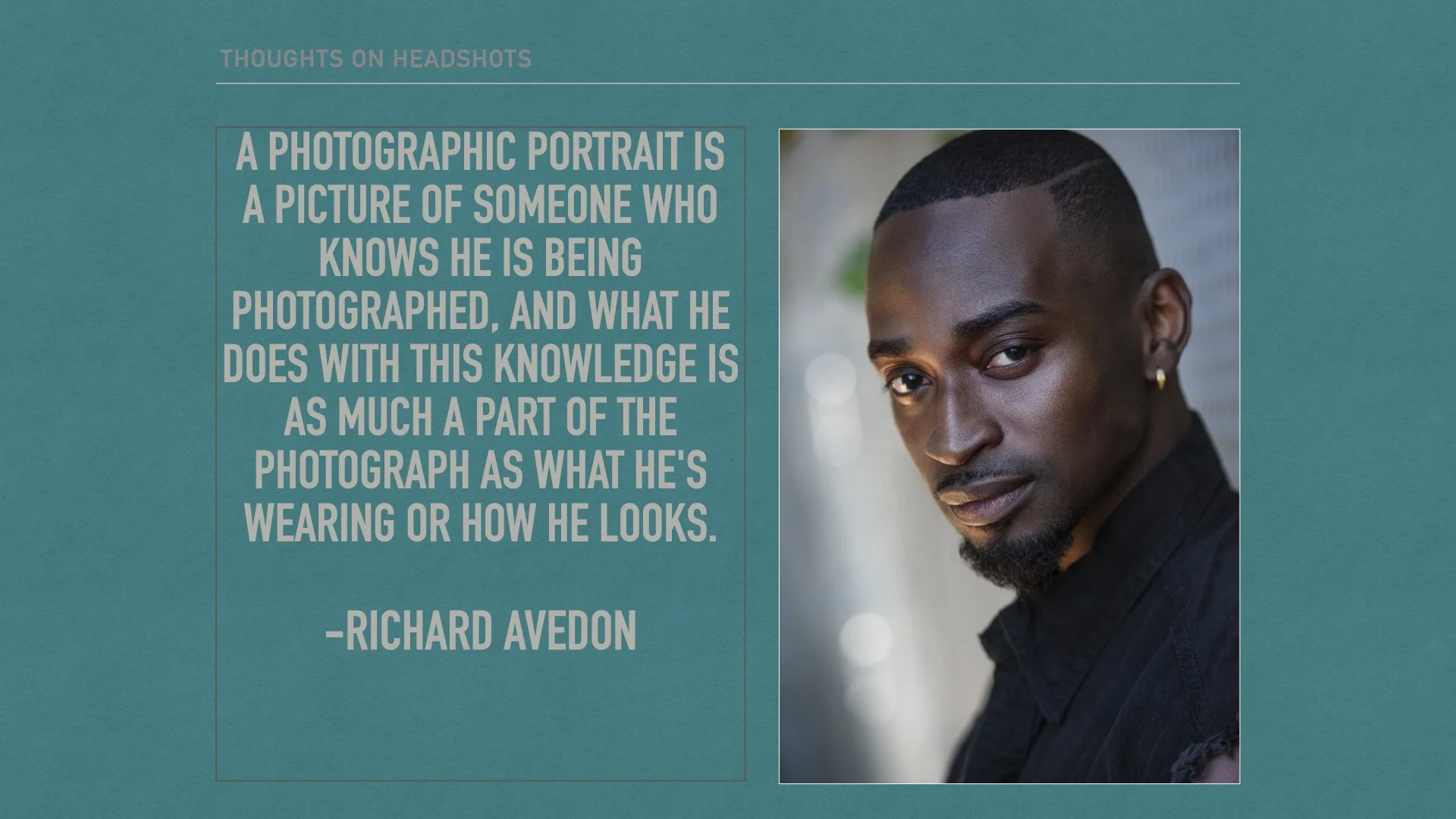
Richard Avedon once said, “A photographic portrait is a picture of someone who knows they are being photographed, and what they do with this knowledge is as much a part of the photograph as what they are wearing or how they look.”

That line is essential for actors.

A headshot is not a candid moment. You know the camera is there. Casting knows you know. The question is not how to hide that awareness. The question is what you do with it.

This is where actors often get tripped up. Narrative does not mean inventing a character or performing a scene. It does not mean forcing emotion. If imagining something helps you arrive at a grounded place, great. But the goal is not to show your process.

Narrative in a headshot is quieter than that.

It is presence. It is the difference between a face that feels inhabited and one that feels vacant. Between an image that feels like a human moment and one that feels like a technical exercise.

Do you actually need to feel something emotional in a headshot? Not necessarily. You just need it to look like you could.

Any actor who has done a long run knows this truth. Some nights you feel everything. Some nights you are thinking about groceries or laundry. The audience does not know the difference, because by that point you have learned how to register truth without relying on real-time emotion.

Headshots work the same way.

Casting is not looking for you to feel something. They are looking for depth, presence, and meaning, whether they articulate it that way or not. They are asking who this person is, what it might feel like to meet them, and whether they belong in the world being cast.

If a headshot has no sense of connection, no sense of openness or quiet tension, there is nothing to interpret. The image does not fail loudly. It simply disappears.

Successful headshots create a pause. That pause might be brief, but it is everything.

If someone sees your headshot and immediately moves on, the image did not do its job. If they linger for even a fraction of a second longer than expected, something is working.

So what causes that pause?

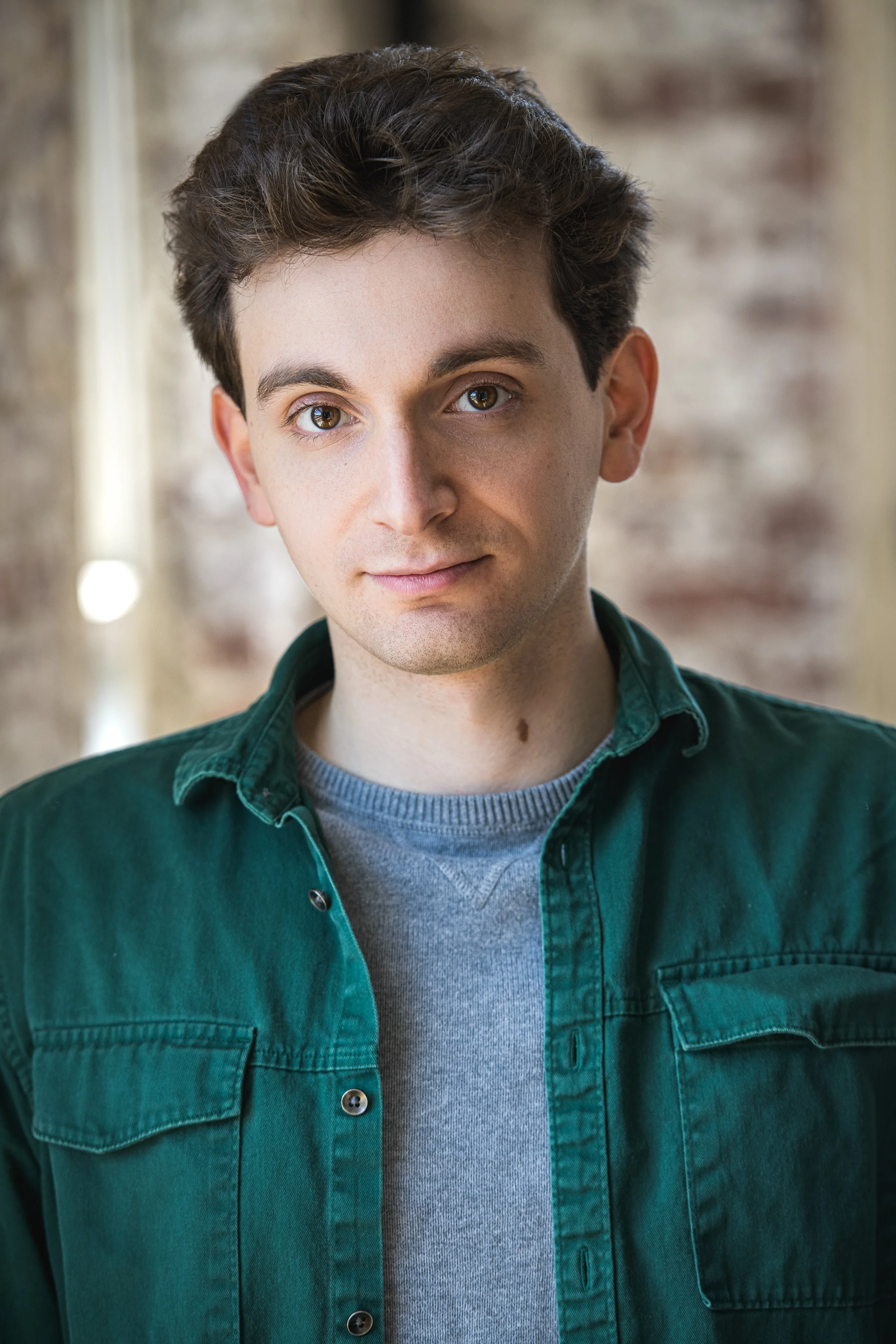
In my experience, it comes down to clarity paired with restraint. The face reads immediately. The eyes feel present. The expression feels intentional without feeling performed. The image gives the viewer just enough information to stay curious.

There are subtle tools at play here. Contrast that guides the eye. Sharpness where it matters. Simplicity that removes distractions. A composition that keeps the viewer circulating inside the frame instead of bouncing out of it.

Which brings us to one of the most common mistakes I see.

In every photograph, there is a hero and a supporting cast. In a headshot, you are the hero. Everything else exists to support you.

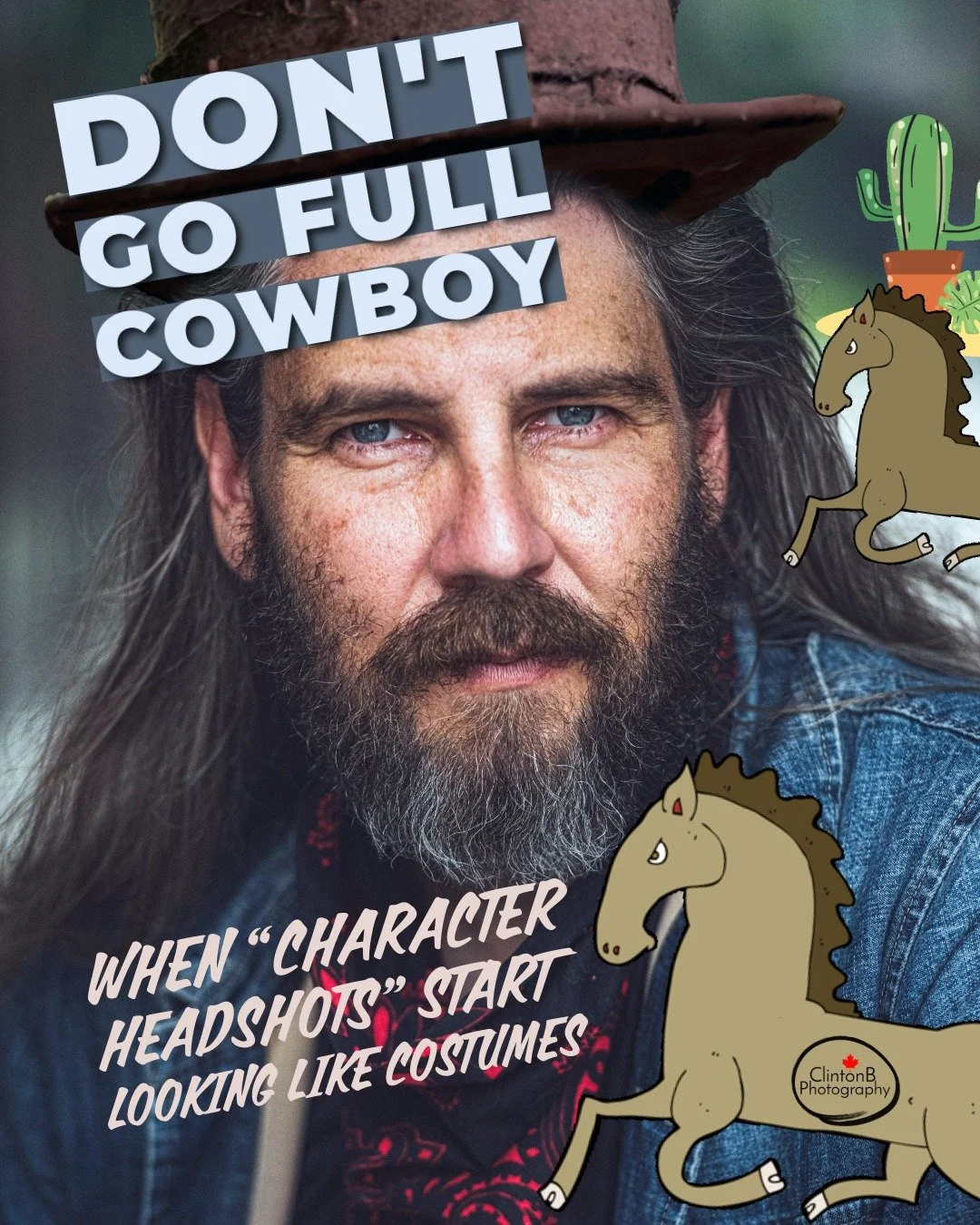
Backgrounds, wardrobe, texture, color, depth of field. None of it should compete for attention. When something in the frame pulls focus away from the face, the supporting cast starts shouting and the hero gets lost.

This is why I often say your clothes should not be more interesting than you are.

When there is competition for attention, headshots start to feel busy, overstyled, or confusing at thumbnail size. This is also why so many technically nice headshots do not work. They are competent, but they do not hold attention. They do not invite interpretation. They do not keep the viewer in the picture.

A successful headshot does not explain everything.

It opens a door.

It says: here is a real person. Clear. Present. Specific. An actor you might want to meet.

If the image earns the click, the rest of your materials finally get a chance to do their job.

That is how I define a successful headshot.

Common Questions This Raises

“So… what actually makes someone click?”
Clarity first. If casting can immediately tell who you are and where you might fit, the image earns attention. Confusion kills curiosity. A strong thumbnail feels readable, alive, and intentional without asking the viewer to work.

“Do I need to look like a character?”
No. You need to look like a real person casting can imagine in their world. Narrative in a headshot is not acting. It’s presence. It’s the sense that there’s a human being here, not a pose.

“Isn’t this just about good lighting?”
Good lighting is necessary, not sufficient. Light helps the face read quickly, but it doesn’t create connection on its own. Plenty of well-lit headshots get skipped because there’s nothing holding the viewer in the image.

“Why do some technically ‘nice’ headshots still not work?”
Because they don’t invite interpretation. There’s nothing for the viewer to stay with. No tension, no openness, no sense of who they’re meeting. They’re pleasant, but forgettable.

“How do I know if my headshot is successful?”
Ask one simple question: does someone pause?
If people click, comment, or say “this really looks like you,” the image is doing its job. If it blends into the grid, it’s not.

If You Want to Go Deeper

If this post clicked for you, these are good places to keep going inside Hack Your Headshots:

What Is a Cinematic Headshot?

A deeper look at why some images feel alive and dimensional, and how cinematic does not mean dramatic. It means intentional, readable, and human.

Specificity First: How Headshots Actually Open Doors

Why headshots are about giving casting a starting point, not proving your range. This pairs directly with the idea of narrative and clarity.

Do You Really Need a “Theatre Headshot”? Let’s Clear This Up

How presence, honesty, and readability matter more than neutrality. Especially useful if you’re submitting across theatre, film, and TV.

Headshot Prep: What Actually Helps (And What Usually Gets in the Way)

How wardrobe, grooming, and preparation support the hero of the image without competing for attention.

If you want to talk through your headshots or book a session, click here. We’ll start with a conversation.

Read More